Small Hands, Soft Paws · by Pini Sapir
Pets, feelings and your little one: what the research really says
A short, illustrated guide for parents of children aged 0–5 — about comfort, empathy and safety with dogs and cats, and simple steps you can try tomorrow.
$14.99 2 PDFs · instant download via Gumroad
- Ages 0–5
- 8 chapters
- 30 quick tips
- 26 cited sources
- Desktop + phone editions
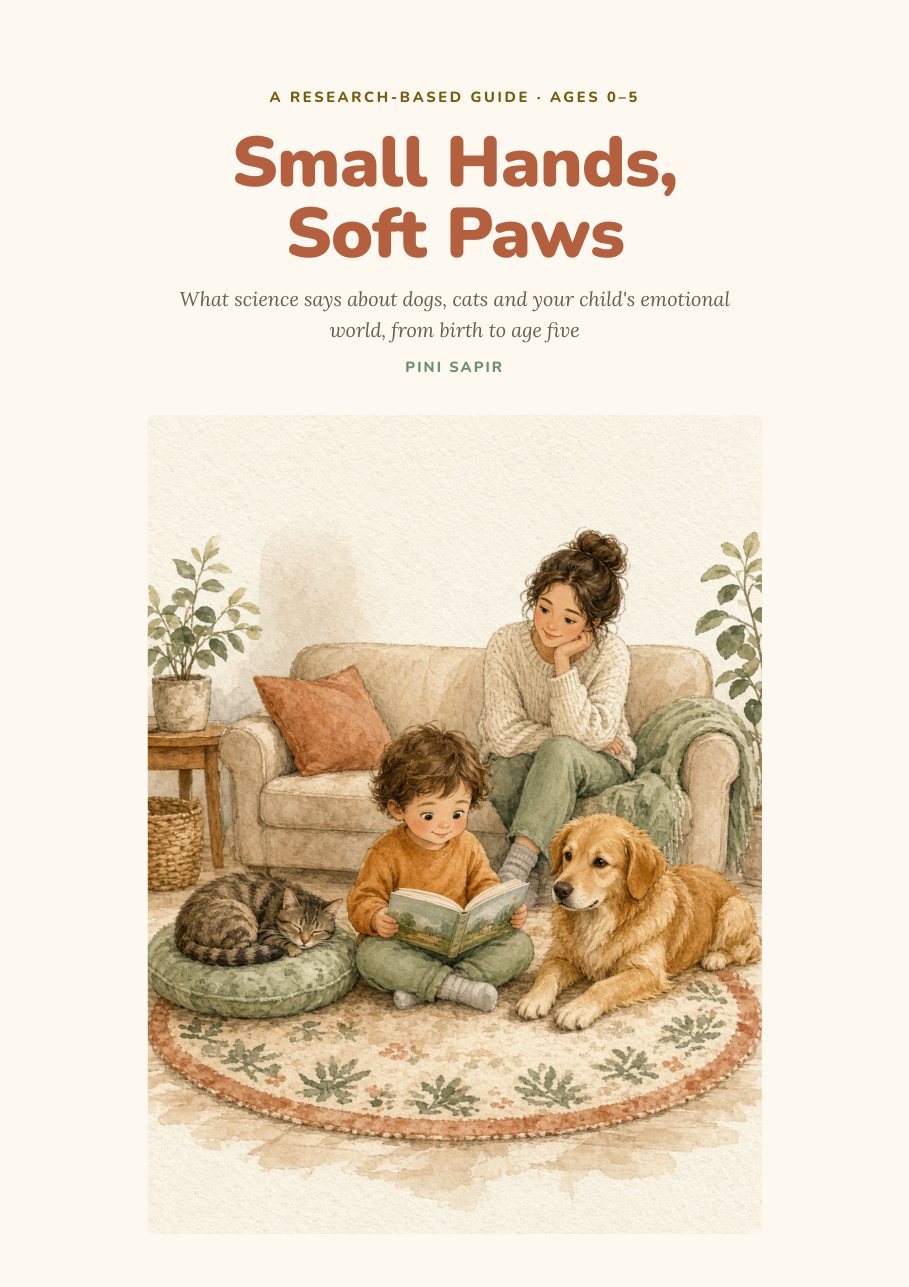
The question every pet-owning parent asks
Is something real going on between your child and the dog?
Your toddler calms down next to the dog. Your preschooler tells the cat a secret. Is something real going on?
If you live with a young child and a dog or a cat, you have probably seen a moment like that. And you have probably also seen two kinds of advice: cheerful headlines that say pets make kids happier, smarter and calmer, and scary ones about bites and germs.
The research sits somewhere in between. It is more hopeful than the scary headlines, and more modest than the cheerful ones. That honest middle is often buried in journal articles, far from the parenting feeds.

Why it matters
The benefits look real, but are still being studied
A systematic review of 22 studies found pets most consistently linked with higher self-esteem and less loneliness in children. It also found most studies were not strong enough to prove the pet was the cause.
Purewal et al., 2017 · source
The risk is usually the dog you know
In hospital studies, younger children were more often bitten at home by a familiar dog, often during a friendly moment like petting or hugging. Supervision matters most exactly when things look sweet.
Reisner et al., 2011 · Chen et al., 2013 · source
Much of the good probably comes through you
In one often-cited study, simply having a pet was not clearly linked to more empathy, but a strong bond with the pet was. The way you talk about the animal's feelings may matter more than the animal itself.
Poresky & Hendrix, 1990 · source
Hopeful and honest, at the same time
Small Hands, Soft Paws puts the research into plain language, age by age, from birth to five. It tells you what studies show, where they are thin, and what you can actually do at home. Many of the studies are correlational: they show links, not proof. A pet is a comfort, not a treatment.
What the research shows
Comfort, empathy, social skills, big feelings, a new sibling, daily goodbyes and pet loss, each explained with its sources.
Where it is thin
Small samples, snapshots in time, parent questionnaires. You get the caveats too, so you can judge for yourself.
What to do tomorrow
Every chapter ends with one simple step you can try in your own living room, plus a full chapter on safety.
What's inside
An opening, 8 short chapters and a last word
- Opening: The Quiet Minute. A small everyday scene, and the big question behind it.
- Chapter 1: What the Research Really Says. The good news, the honest news, and a fair way to read the evidence as a parent.
- Chapter 2: Safety First, Always. The rule with no exceptions, why young children are at special risk, reading a dog's (and a cat's) body language, simple house rules, hygiene, toxoplasmosis and pregnancy, allergies, and choosing a pet when you have small kids.
- Chapter 3: The First Year (0 to 1). What one careful study found about babies and dogs, the emotional side of the first year, and step by step: bringing a new baby home to an existing pet.
- Chapter 4: Toddlers (1 to 3) and First Empathy. Gentle hands, naming feelings, what research says about the child–pet bond and empathy, what to do when toddlers are rough, and small jobs with big meaning.
- Chapter 5: Preschoolers (3 to 5) and Friendship. The pet as a confidant, social skills and the playground, reading to a pet, real (scaled-down) responsibility, playdates and visiting dogs.
- Chapter 6: Big Feelings. Anxiety and what one study found (and could not show), frustration and the "pause button", fear of animals, using the pet to talk about feelings, and when to get help.
- Chapter 7: A New Sibling and Daily Goodbyes. A special role for the older child, goodbye rituals for daycare and preschool, and moving house with kids and pets.
- Chapter 8: When a Pet Dies. What young children understand about death, clear words to use, how grief may look in small children, ways to say goodbye, and whether to get a new pet.
- A Last Word, a quick-reference box with the five house rules, and a full list of 26 sources.
What you get
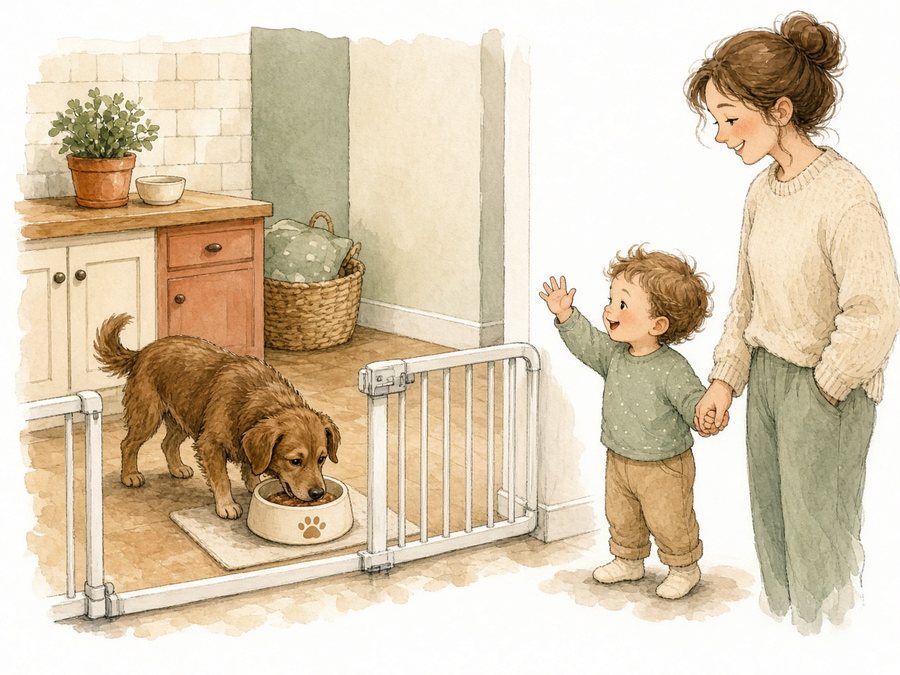
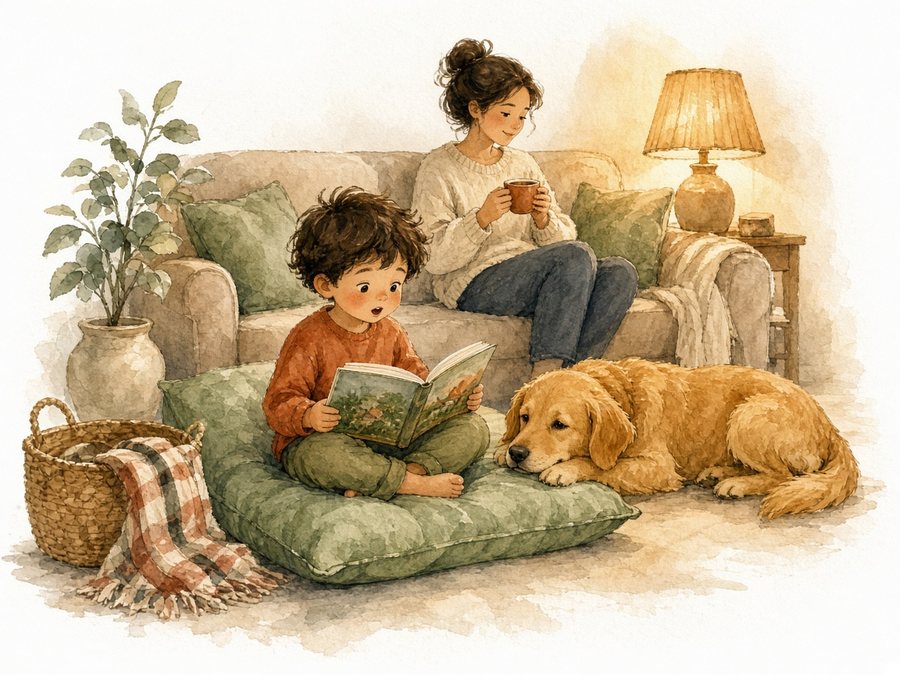
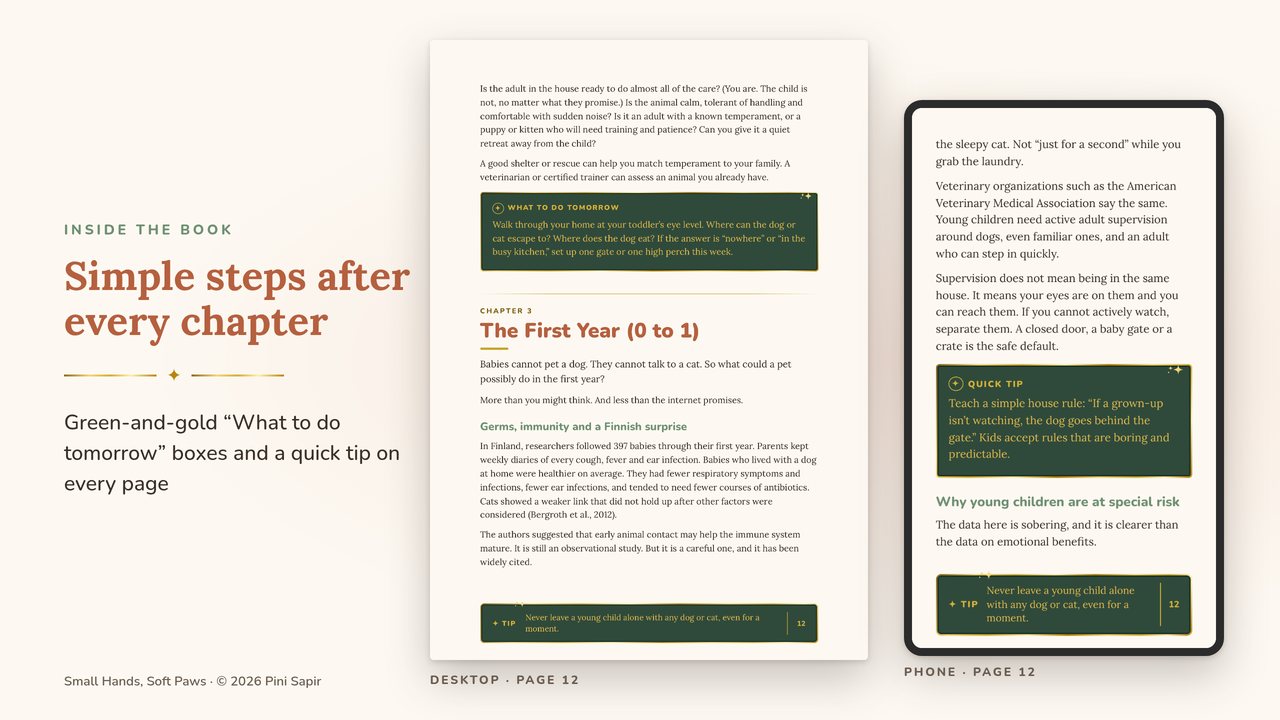
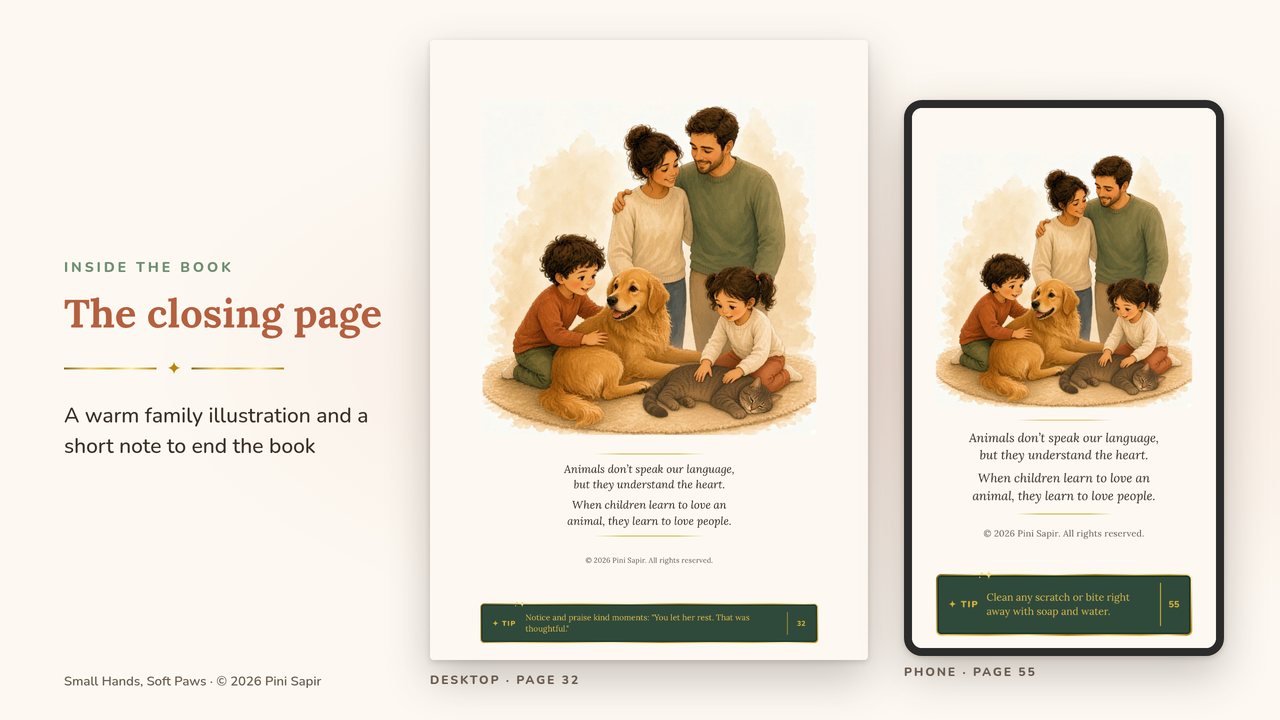
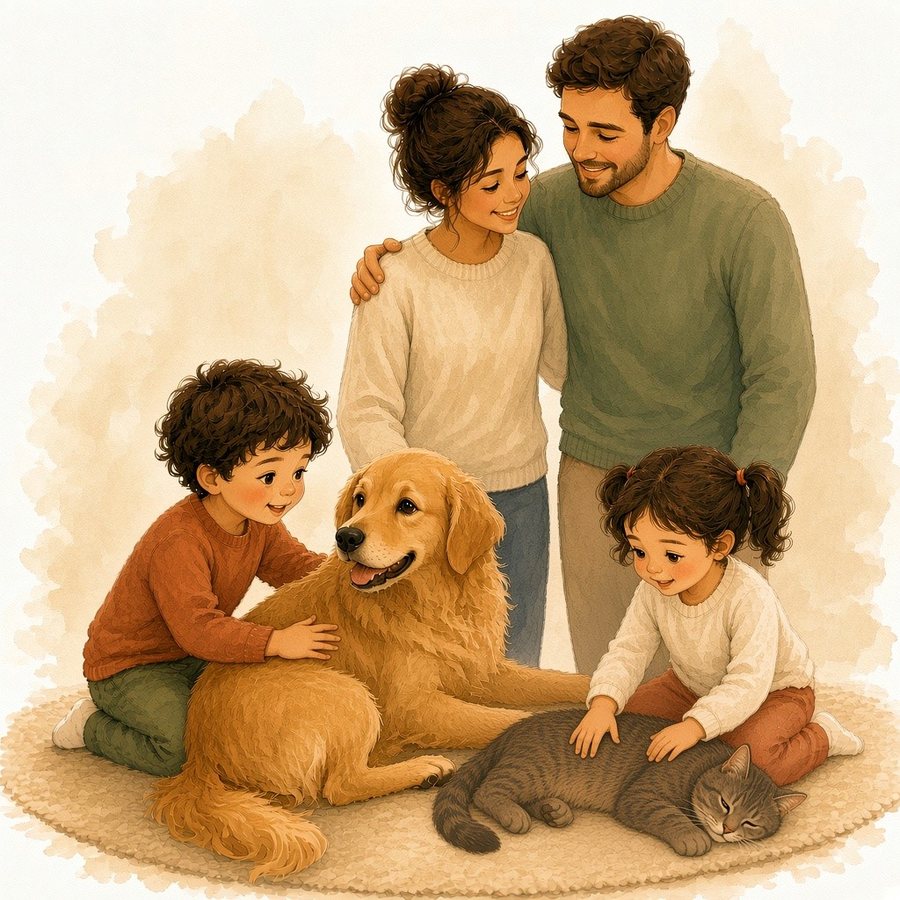
Also inside: a "What to do tomorrow" step after every chapter, the five house rules on one page, and 13 warm watercolor illustrations (plus the cover) to look at together with your child. About 6,000 words: you can read it in an evening.
A look inside
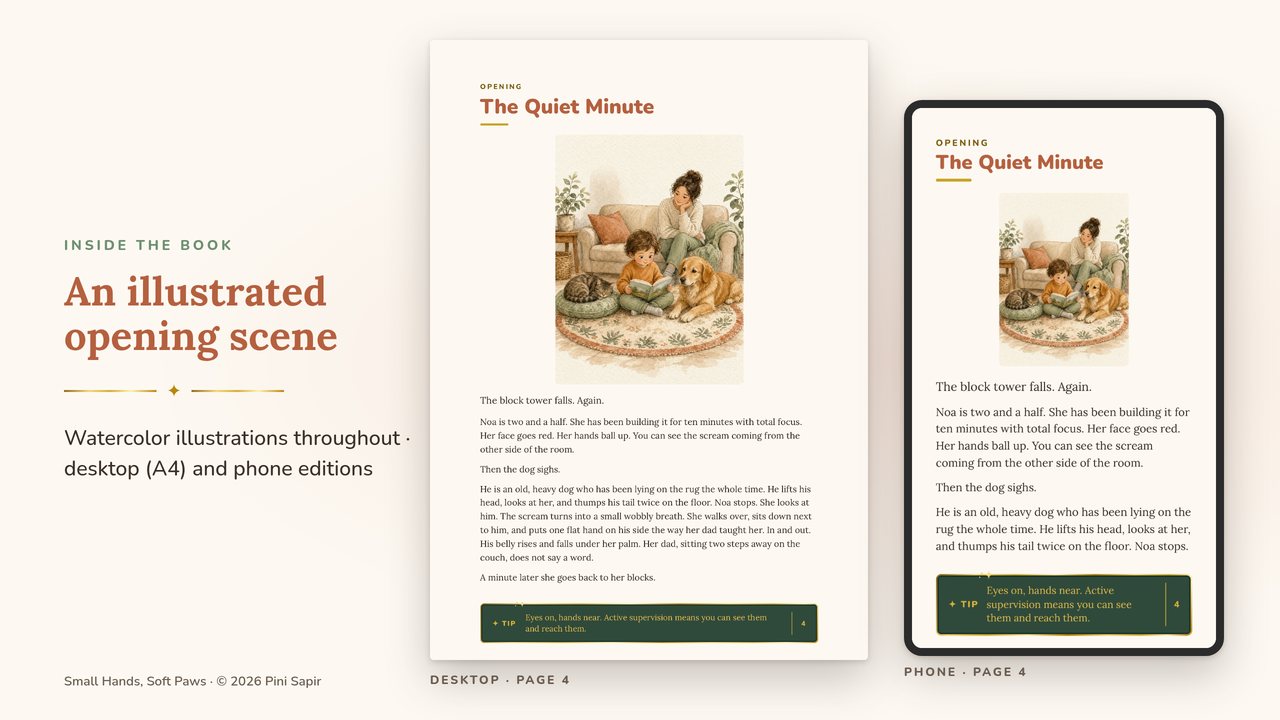
A taste of the 30 tips
Eyes on, hands near. Active supervision means you can see them and reach them.
Say what the pet might feel, out loud. Empathy starts with words.
Pets are a comfort, not a treatment.
Is this guide right for you?
It's for you if…
- You're a parent or caregiver of a baby, toddler or preschooler (0–5) and you live with a dog or a cat, or are thinking about getting one.
- You're expecting a baby and already have a pet at home.
- You're a grandparent, nanny or early-childhood educator who wants clear, practical, evidence-aware guidance.
- You like to know what the research actually says, without hype, including where it is uncertain.
It's probably not for you if…
- You want a treatment plan for anxiety or another condition. The book is general information, and a pet is not a treatment.
- You need a dog-training manual or help with an aggressive animal. Please see your vet or a qualified trainer or veterinary behaviorist.
- You want a guaranteed result. The book promises no outcome.
- Your children are older, or your pets are reptiles, birds or small mammals. The focus is dogs, cats and ages 0–5.
Questions, answered honestly
What format is it, and what do I need to read it?
You get two PDF files: a desktop & tablet edition (A4, 33 pages) and a phone edition laid out for small screens (56 pages). The content is the same in both. Any PDF reader works: the one built into your phone, tablet, computer or browser. No app or account is needed to read it. The book is in English.
How do I get it after I pay?
Checkout is handled by Gumroad. Right after payment you can download the files, and Gumroad emails you a receipt with download links. If you have a Gumroad account, the book is also kept in your Gumroad library.
Which file should I open?
On a phone, open the phone edition: large text, one column, no pinching or zooming. On a computer, tablet or for printing, open the desktop & tablet edition.
What if it isn't right for me? Can I get a refund?
Yes. The book comes with a 14-day money-back guarantee, no questions asked. If it isn't right for you, reply to your Gumroad receipt email within 14 days of purchase and ask for a refund (replies go to the author). You don't need to give a reason. The refund is handled and issued through Gumroad. If a file doesn't open, write too, so it can be sorted out.
Is this medical, psychological or veterinary advice?
No. The book is educational, general information for parents. It does not diagnose or treat any condition and does not promise any result. Always talk to your pediatrician or family doctor, a qualified child psychologist and your veterinarian about your own child and animal, and follow local public health guidance. See the full disclaimer.
Will a pet fix my child's anxiety, tantrums or shyness?
No book can honestly promise that. Some studies find links between pets and things like less loneliness or more prosocial behavior, but most are correlational and cannot prove the pet caused anything. The book explains what was found, what wasn't, and when to get professional help.
We don't have a pet yet. Is it still useful?
Yes, if you're thinking about one. Chapter 2 covers choosing a pet when you have small kids, allergies and hygiene, and Chapter 3 covers preparing a pet for a new baby.
Who made the illustrations?
The watercolor illustrations were created with the help of AI. They show fictional characters.
What does it cost?
$14.99 USD, one time. No subscription. Gumroad may show the price in your local currency and add sales tax or VAT where it applies.
Make room for the quiet minutes, safely
An honest, illustrated guide to dogs, cats and your child's emotional world, from birth to five. Read it in an evening; use one small step tomorrow.
$14.99 desktop + phone PDFs
Secure checkout by Gumroad. Educational information, not medical or veterinary advice.